
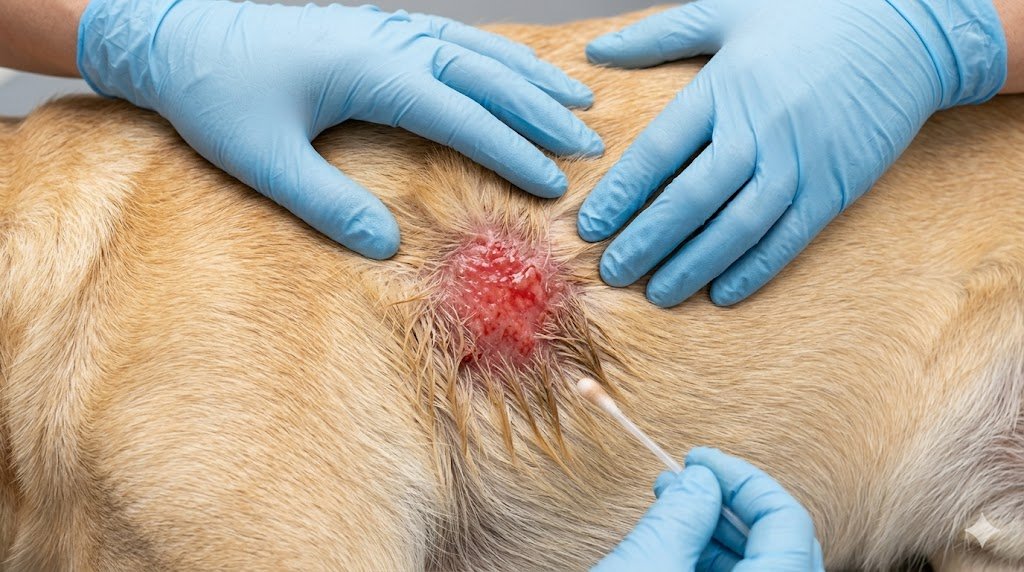
Hot spots and minor wounds are common skin problems that many pet owners encounter, especially in dogs and cats that spend time outdoors or frequently scratch, lick, or groom themselves. While small irritations may sometimes improve with basic care, untreated skin problems can become worse when pets continue licking or scratching the affected area. Understanding proper Hot Spot & Wound Care for dogs and cats can help pet owners respond appropriately, support healing, and recognize when professional veterinary attention is necessary.
What Are Hot Spots?
Hot spots, also known as acute moist dermatitis, are irritated areas of skin that can develop quickly. They may appear red, moist, inflamed, or painful and are often accompanied by hair loss around the affected area.
Dogs are generally more prone to hot spots, although cats can also experience skin irritation and wounds caused by allergies, parasites, infections, or excessive grooming.
Hot spots can develop when a pet repeatedly scratches, licks, or bites an itchy area. This creates skin damage, which can encourage further irritation and potentially allow bacteria to multiply.
Common Causes of Hot Spots
There are many reasons why a pet may develop a hot spot.
Common triggers include:
- Flea or tick bites
- Environmental allergies
- Food sensitivities
- Insect bites
- Moisture trapped in the coat
- Excessive licking
- Poor grooming
- Ear infections
- Skin allergies
- Underlying infections
Identifying the underlying cause is important because treating only the visible irritation may not prevent the problem from returning.
For example, a dog repeatedly developing hot spots may have an allergy or parasite problem that needs to be addressed separately.
How to Recognize a Minor Wound
Minor wounds can occur for many reasons, including small scratches, rough play, or contact with sharp objects.
Signs of a minor wound may include:
- A small cut or scrape
- Mild redness
- Slight swelling
- A small amount of dried blood
- Superficial skin irritation
However, not every wound is suitable for home care. Deep cuts, puncture wounds, severe bleeding, wounds caused by animal bites, or injuries involving the eyes or joints require prompt veterinary attention.
Gently Clean the Affected Area
If your pet has a small superficial wound, gently cleaning the area can help remove dirt and debris.
Before beginning, wash your hands and keep your pet calm. If possible, carefully move the fur away from the affected area so you can see the skin clearly.
Use a veterinarian-approved wound-cleaning solution or follow your veterinarian’s instructions. Avoid harsh household chemicals or products that haven’t been specifically recommended for use on animals.
If your pet appears to be in significant pain during cleaning, stop and contact a veterinarian.
Prevent Excessive Licking and Scratching
One of the biggest challenges in caring for hot spots and minor wounds is preventing your pet from repeatedly disturbing the affected area.
Constant licking or scratching can:
- Delay healing
- Increase irritation
- Reopen wounds
- Introduce bacteria
- Make inflammation worse
Depending on the location of the wound, your veterinarian may recommend an Elizabethan collar or another protective solution.
Keeping your pet’s nails trimmed may also reduce damage caused by scratching.
Keep the Area Clean and Dry
Moisture can contribute to skin irritation and create an environment where microorganisms may multiply.
After bathing or outdoor activities, make sure your pet is thoroughly dried, especially around areas where hot spots commonly develop.
Dogs with thick or long coats may need additional grooming attention. Regular brushing can help prevent mats and improve airflow around the skin.
However, avoid aggressively brushing directly over an irritated area.
Be Careful With Topical Products
Pet owners can find many sprays, creams, and other topical products designed for skin irritation and wound care. However, not every product is suitable for every animal.
Before applying a product, check:
- Whether it is intended for dogs, cats, or both
- The recommended application instructions
- Whether your pet may lick the treated area
- Any age or weight restrictions
- Potential interactions with other treatments
Products containing ingredients that are safe for humans may not always be appropriate for pets.
When in doubt, consult your veterinarian before using a topical treatment.
Monitor the Wound During Healing
Once basic care has begun, monitor the affected area closely.
Look for signs that the condition is improving, such as:
- Reduced redness
- Less swelling
- Decreased irritation
- Drying of superficial wounds
- Reduced licking or scratching
You should also watch for signs that the condition is getting worse.
Contact a veterinarian if you notice:
- Increasing redness
- Significant swelling
- Pus or discharge
- Foul odor
- Severe pain
- Fever or lethargy
- Rapidly spreading skin irritation
Early veterinary intervention can prevent minor problems from developing into more serious conditions.
Address the Underlying Cause
Treating the visible skin problem is only part of the solution.
If your pet repeatedly develops hot spots, consider whether there may be an underlying cause.
Potential contributors include:
- Flea infestations
- Food allergies
- Environmental allergies
- Parasites
- Bacterial infections
- Fungal infections
- Ear problems
A veterinarian can help determine the cause through a physical examination and, when necessary, additional testing.
Addressing the underlying issue can reduce the likelihood of recurring skin problems.
Keep Your Pet’s Environment Clean
A clean environment can support overall skin health.
Wash your pet’s bedding regularly and clean areas where your pet frequently sleeps or rests. If fleas or other parasites are suspected, environmental control may also be necessary.
Regular cleaning can help reduce exposure to potential irritants and parasites.
Maintain Good Grooming Habits
Regular grooming is an important part of preventative pet care.
Brushing can help:
- Remove loose fur
- Prevent mats
- Improve coat condition
- Make skin problems easier to spot
Bathing should be appropriate for your pet’s needs and should not be excessive, as over-bathing can sometimes contribute to dry or irritated skin.
Use pet-specific grooming products and follow veterinary recommendations if your pet has sensitive skin.
When to See a Veterinarian
Some wounds and skin problems require professional attention.
Seek veterinary care if your pet has:
- A deep or large wound
- A puncture wound
- An animal bite
- Heavy bleeding
- A wound near the eye
- Severe swelling
- Significant pain
- A suspected infection
- A rapidly spreading hot spot
- Repeated or unexplained skin problems
Cats can be particularly vulnerable to infections from bite wounds, so injuries caused by fights should be evaluated by a veterinarian even if the external wound appears small.
Prevention Is Better Than Treatment
Preventing hot spots and minor wounds starts with regular observation and good general care.
Helpful habits include:
- Checking your pet’s skin regularly
- Maintaining flea and tick prevention
- Keeping coats clean and groomed
- Managing allergies with veterinary guidance
- Cleaning bedding regularly
- Preventing excessive scratching and licking
- Addressing unusual skin changes early
Regular veterinary checkups can also help identify health concerns before they become more serious.
Final Thoughts
Caring for hot spots and minor wounds requires patience, cleanliness, and careful observation. Small superficial injuries may sometimes be managed with appropriate basic care, but pet owners should always monitor the affected area and seek veterinary advice when symptoms worsen or fail to improve.
The most effective approach combines proper wound care with prevention. By maintaining good grooming habits, controlling parasites, keeping your pet’s environment clean, and addressing underlying allergies or health conditions, you can help support healthier skin and reduce recurring problems.
Remember that dogs and cats have different needs, and every wound or skin condition is unique. When you’re unsure about the severity of an injury or the right treatment, consulting a veterinarian is the safest choice. With attentive care and timely professional guidance, pet owners can help their companions stay comfortable and maintain healthy skin throughout their lives.